
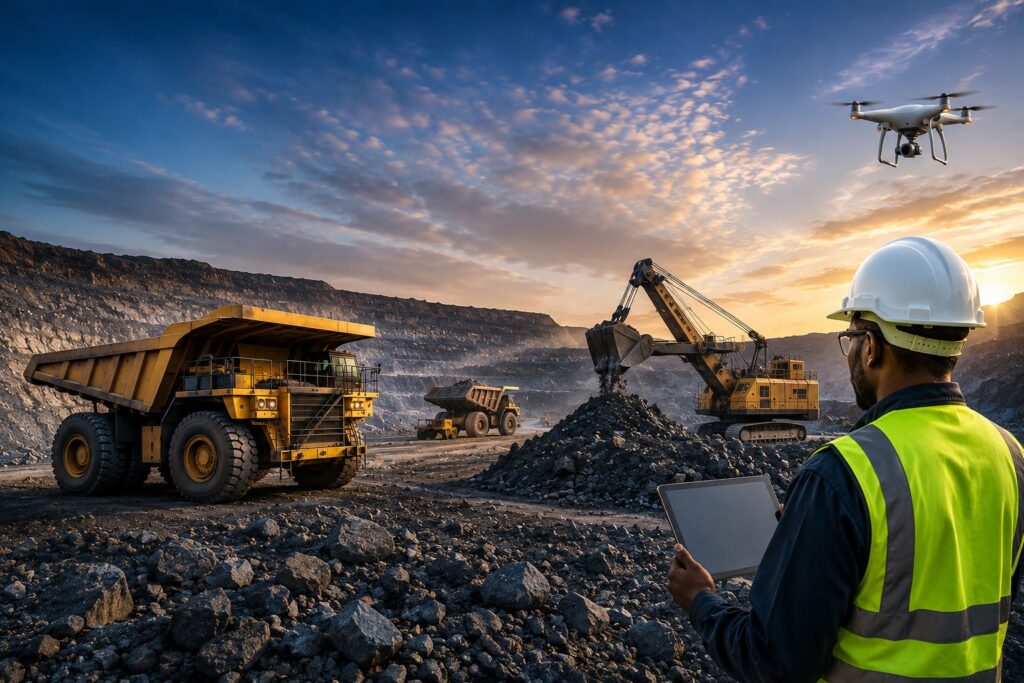
Africa has long been recognized as one of the world’s richest regions in mineral resources. From gold, diamonds, copper, cobalt, and iron ore to platinum, manganese, and rare earth elements, the continent plays a crucial role in supporting global industries. However, the mining sector has evolved significantly over the past decade. Traditional mining practices are increasingly being replaced by technology-driven mining solutions that improve productivity, enhance worker safety, reduce environmental impact, and maximize operational efficiency.
Today, mining companies across Africa are embracing digital transformation to meet rising global demand while maintaining sustainable operations. Technologies such as automation, artificial intelligence (AI), data analytics, Internet of Things (IoT), remote monitoring, predictive maintenance, GPS fleet management, and advanced drilling systems are changing how mines are planned, operated, and maintained.
This technological revolution is not only improving mining performance but also creating opportunities for economic development, workforce advancement, and environmental stewardship across the continent.
In this article, we’ll explore how technology-driven mining solutions are transforming mining operations across Africa, the key innovations shaping the industry, their benefits, challenges, and what the future holds for mining businesses.
The Evolution of Mining in Africa
Mining has always been one of Africa’s strongest economic pillars. Countries including South Africa, Botswana, Zambia, the Democratic Republic of Congo, Ghana, Tanzania, Namibia, Guinea, and Zimbabwe possess some of the world’s largest mineral reserves.
Historically, mining operations relied heavily on manual labor, conventional equipment, and reactive maintenance strategies. While these methods supported production for decades, they also resulted in several operational challenges, including:
- Equipment downtime
- Low productivity
- High operating costs
- Worker safety concerns
- Environmental degradation
- Limited operational visibility
As global competition intensified and commodity demand increased, mining companies realized the need to modernize operations through innovative technologies.
Why Technology Matters in Modern Mining
Mining is one of the most complex industries in the world. Every stage—from exploration and drilling to blasting, hauling, processing, and maintenance—requires precision and coordination.
Technology helps mining companies overcome common challenges by providing:
- Real-time operational insights
- Automated workflows
- Improved equipment utilization
- Lower fuel consumption
- Better safety monitoring
- Predictive maintenance capabilities
- Reduced operational risks
Instead of relying solely on manual inspections or historical reports, operators can now make informed decisions based on live operational data.
Automation Is Revolutionizing Mining Operations
Automation has become one of the biggest drivers of mining transformation across Africa.
Mining companies are increasingly deploying automated systems for repetitive, dangerous, and labor-intensive tasks.
Examples include:
Automated Drilling
Modern drilling rigs use GPS positioning and onboard software to drill with remarkable accuracy. This improves blast quality while reducing drilling errors.
Autonomous Haul Trucks
Self-operating haul trucks transport materials with minimal human intervention. These vehicles optimize routes, reduce idle time, and improve fuel efficiency.
Remote-Controlled Equipment
Machines operating in hazardous underground environments can now be controlled from safe locations, minimizing worker exposure to dangerous conditions.
Automation delivers consistent performance while significantly reducing operational risks.
Artificial Intelligence Is Improving Mining Decisions
Artificial Intelligence (AI) has become an essential component of modern mining.
AI systems analyze massive amounts of operational data to identify patterns that humans may overlook.
Mining companies use AI for:
- Ore grade prediction
- Equipment performance monitoring
- Production optimization
- Resource estimation
- Predictive maintenance
- Safety risk assessment
For example, AI algorithms can predict equipment failures days or even weeks before breakdowns occur. This allows maintenance teams to repair components during scheduled downtime rather than responding to costly emergency failures.
The result is increased productivity and lower maintenance costs.
Internet of Things (IoT) Enables Real-Time Mine Monitoring
The Internet of Things (IoT) connects mining equipment, vehicles, sensors, and control systems into one integrated network.
Sensors installed across mining sites continuously monitor:
- Temperature
- Vibration
- Fuel usage
- Tire pressure
- Engine health
- Dust levels
- Air quality
- Water usage
- Equipment location
This real-time data enables operators to identify issues immediately before they escalate into larger operational problems.
IoT also improves communication between field personnel and control centers, resulting in faster decision-making.
Predictive Maintenance Is Reducing Equipment Downtime
Mining equipment represents one of the largest capital investments for mining companies.
Unexpected equipment failures can cost thousands—or even millions—of dollars in lost production.
Technology-driven predictive maintenance helps prevent these losses.
Using machine sensors and AI analytics, maintenance teams can monitor:
- Engine performance
- Hydraulic pressure
- Oil quality
- Bearing temperatures
- Component wear
Instead of replacing parts based on fixed schedules, maintenance is performed only when data indicates it’s necessary.
Benefits include:
- Lower maintenance costs
- Longer equipment lifespan
- Reduced downtime
- Increased productivity
- Better spare parts planning
Predictive maintenance has become a competitive advantage for mining companies operating large fleets across Africa.
Fleet Management Systems Improve Operational Efficiency
Mining operations often involve hundreds of vehicles moving continuously across large sites.
Technology-driven fleet management systems monitor:
- Vehicle locations
- Fuel consumption
- Driver behavior
- Equipment utilization
- Cycle times
- Payload efficiency
GPS tracking combined with advanced software enables dispatchers to optimize equipment allocation and eliminate bottlenecks.
Mining companies can:
- Reduce idle time
- Improve fuel efficiency
- Increase production rates
- Enhance driver safety
- Optimize transportation routes
These improvements translate directly into higher profitability.
Digital Twins Are Changing Mine Planning
One of the most exciting innovations in mining is the use of digital twin technology.
A digital twin is a virtual representation of a physical mining operation.
It combines:
- Geological data
- Equipment information
- Operational performance
- Environmental conditions
- Production metrics
Engineers can simulate different mining scenarios before implementing changes in the real world.
Benefits include:
- Improved production planning
- Reduced operational risk
- Better equipment scheduling
- Enhanced safety planning
- Optimized mine layouts
Digital twins help mining companies make smarter long-term investment decisions.
Advanced Data Analytics Supports Better Decision-Making
Modern mining generates enormous amounts of operational data every day.
Without advanced analytics, much of this valuable information remains unused.
Data analytics platforms convert raw information into actionable insights by identifying:
- Productivity trends
- Equipment inefficiencies
- Fuel usage patterns
- Maintenance priorities
- Workforce performance
- Resource allocation opportunities
Executives can use dashboards displaying real-time Key Performance Indicators (KPIs) to monitor operations across multiple mining sites simultaneously.
This level of visibility significantly improves strategic decision-making.
Technology Is Enhancing Worker Safety
Safety remains one of the mining industry’s highest priorities.
Technology has dramatically reduced workplace risks through:
Wearable Safety Devices
Smart helmets and wearable sensors monitor:
- Worker location
- Heart rate
- Fatigue levels
- Exposure to hazardous gases
Emergency alerts can be triggered instantly when dangerous conditions arise.
Drone Inspections
Drones inspect:
- Open pits
- High walls
- Tailings dams
- Stockpiles
- Conveyor systems
Instead of placing workers in hazardous environments, drones capture detailed aerial images safely.
Remote Monitoring
Control rooms continuously monitor underground operations using cameras and sensors, enabling faster emergency responses.
These innovations create safer working environments while improving operational efficiency.
Sustainable Mining Through Technology
Environmental responsibility has become a major priority for mining companies operating in Africa.
Technology supports sustainability by reducing environmental impact through:
Efficient Water Management
Smart monitoring systems optimize water usage while detecting leaks and minimizing waste.
Lower Fuel Consumption
Advanced fleet management systems reduce unnecessary fuel usage and greenhouse gas emissions.
Energy Optimization
Mining operations increasingly integrate renewable energy sources with intelligent energy management systems.
Waste Reduction
Advanced ore sorting technologies maximize mineral recovery while reducing waste generation.
Technology allows mining companies to achieve both productivity and sustainability goals simultaneously.
Challenges to Technology Adoption in Africa
Although technology offers tremendous opportunities, implementation is not without challenges.
Common obstacles include:
High Initial Investment
Advanced equipment and digital infrastructure require significant capital expenditure.
Skills Development
Employees need ongoing training to operate sophisticated technologies effectively.
Connectivity Limitations
Some remote mining locations still face unreliable internet and communication infrastructure.
Integration Complexity
Older equipment may require upgrades before it can integrate with modern digital systems.
Despite these challenges, long-term operational benefits often outweigh the initial investment costs.
The Growing Importance of Local Partnerships
Technology adoption becomes more successful when supported by strong local partnerships.
Mining companies increasingly collaborate with regional service providers that offer:
- Equipment maintenance
- Technical support
- Spare parts availability
- Operator training
- Engineering expertise
- Logistics solutions
Local partnerships reduce equipment downtime while strengthening regional economic development.
These collaborations also improve response times compared to relying solely on overseas suppliers.
Future Trends Shaping African Mining
The next decade promises even greater innovation across Africa’s mining sector.
Emerging technologies expected to drive future growth include:
Autonomous Mining Ecosystems
Entire mining operations may eventually function through interconnected autonomous equipment working together with minimal human intervention.
Artificial Intelligence Expansion
AI will continue improving mineral exploration, production forecasting, maintenance planning, and operational optimization.
Green Mining Technologies
Electric mining vehicles, renewable energy integration, and carbon reduction initiatives will become increasingly common.
Blockchain for Supply Chain Transparency
Blockchain technology will improve mineral traceability, ensuring ethical sourcing and enhancing customer confidence.
Robotics
Mining robots will perform dangerous underground inspections, reducing risks for human workers.
These innovations will help Africa remain a leading global supplier of critical minerals.
Economic Benefits of Technology-Driven Mining Solutions
The adoption of advanced mining technologies creates value far beyond individual mining companies.
Broader economic benefits include:
- Increased foreign investment
- Higher mineral production
- Improved export revenues
- Job creation in technical fields
- Infrastructure development
- Enhanced workforce skills
- Greater competitiveness in global markets
Technology-driven mining also encourages knowledge transfer and supports the growth of local engineering and service industries.
As Africa continues developing its mining capabilities, technology will play a central role in accelerating economic growth.
Best Practices for Successful Digital Mining Transformation
Mining organizations seeking long-term success should focus on several key strategies:
- Develop a clear digital transformation roadmap.
- Invest in scalable technologies that integrate with existing systems.
- Prioritize employee training and continuous skills development.
- Build partnerships with trusted equipment and technology providers.
- Implement predictive maintenance programs to maximize asset reliability.
- Use data analytics to guide operational decisions.
- Strengthen cybersecurity measures to protect digital infrastructure.
- Balance productivity improvements with environmental and social responsibility.
Organizations that combine advanced technology with skilled professionals and sustainable practices are better positioned to achieve long-term operational excellence.
Conclusion
The African mining industry is entering a new era defined by technology-driven innovation, operational excellence, and sustainable growth. Digital transformation is reshaping every stage of the mining lifecycle, from exploration and drilling to hauling, maintenance, safety, and environmental management. Technologies such as automation, artificial intelligence, IoT, predictive maintenance, digital twins, fleet management systems, and advanced analytics are enabling mining companies to operate more efficiently while reducing costs and minimizing operational risks.
Beyond productivity gains, these innovations are helping organizations improve worker safety, extend equipment life, optimize resource utilization, and meet increasingly stringent environmental standards. As governments, mining companies, equipment providers, and technology partners continue investing in smart mining solutions, Africa is well-positioned to strengthen its role as a global leader in responsible and efficient mineral production.
Ultimately, the future of mining across Africa belongs to organizations that embrace innovation, invest in people, and leverage technology to create resilient, sustainable, and high-performing operations. By adopting intelligent mining solutions today, companies can build a stronger foundation for long-term success while contributing to economic growth, environmental stewardship, and the development of thriving communities across the continent.